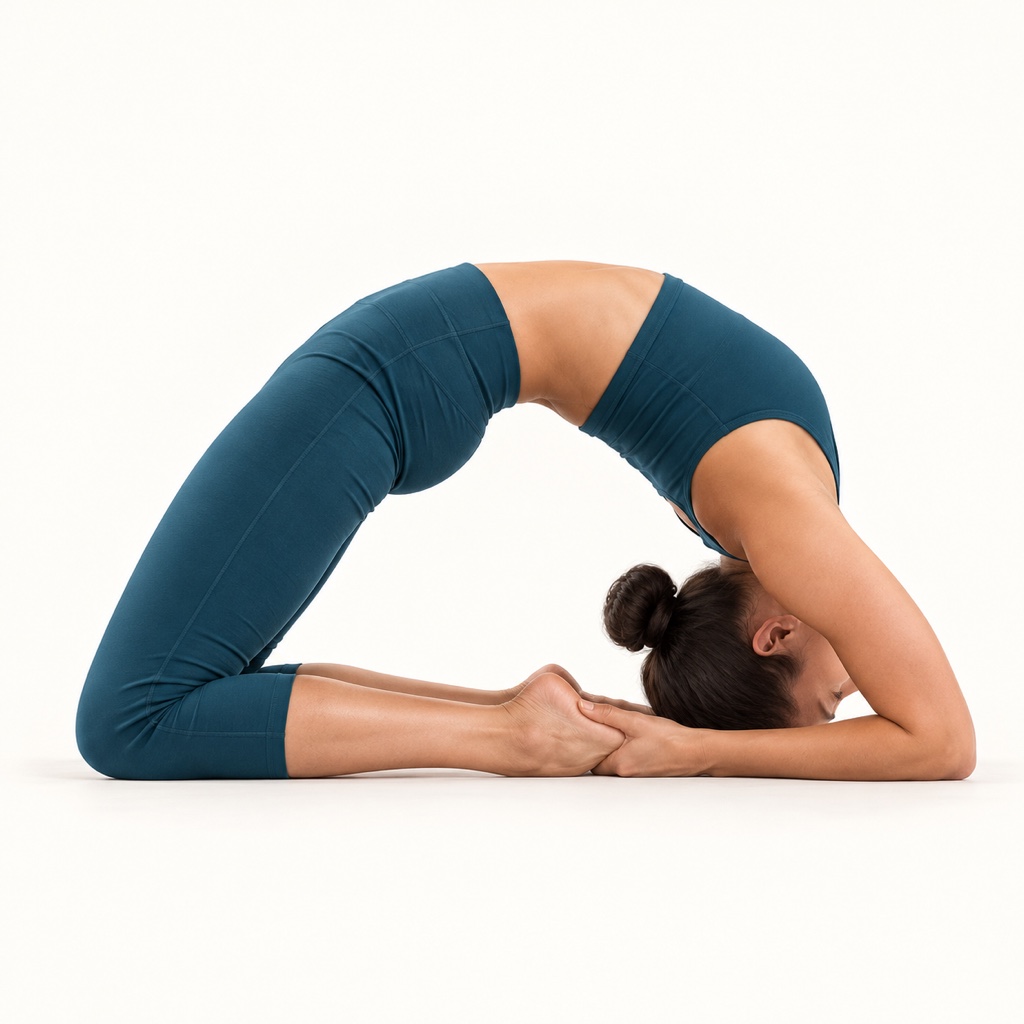
How to practice Little Thunderbolt Pose
- Begin kneeling with the knees about hip-width apart and the thighs upright.
- Place the hands at the pelvis and lift the breastbone before beginning to arc backward.
- Keep the thighs active and hips moving forward as the hands reach toward the ankles.
- With experienced guidance, continue the controlled backbend until the crown of the head approaches the feet, then return using the strength of the legs and trunk.
Practice tips
- Prepare with Camel Pose and supported quadriceps stretches.
- Practice a smaller kneeling backbend with hands at the pelvis.
- Use qualified hands-on instruction rather than attempting the deepest shape alone.
Practice note: Advanced practice only; avoid with neck, spine, knee or blood-pressure concerns and never force the head toward the feet.
AdvertisementReserved for a relevant, non-intrusive sponsor
Understanding Little Thunderbolt Pose
Little Thunderbolt Pose, or Laghu Vajrasana, is an advanced kneeling backbend related to Camel Pose. It combines deep spinal extension with strong eccentric control from the thighs and trunk. The full head-to-feet position is not appropriate without extensive preparation and qualified supervision.
Is Little Thunderbolt Pose a variation of Camel Pose?
Yes. Both begin from kneeling and require the thighs to remain active as the chest lifts. Little Thunderbolt continues into a much deeper backbend and demands substantially more strength and mobility.
Common practice points
- Create length before moving into a deeper spinal curve.
- Keep the legs engaged so the lower back does not do all the work.
- Choose a smaller variation if breathing becomes restricted.
Prepare and progress
Review the steps before entering the pose, use the suggested modifications early, and leave enough energy for a controlled exit.
Useful preparations
Progress is not measured by how closely a pose matches a photograph. Comfort, breathing and control are more useful guides.